A collection of case histories of successful collaborations between High Technology Network Laboratories and businesses. These are tangible and customisable examples of the application of new technologies, products, or services that show how industrial research can meet the needs of innovation.

Results: 5

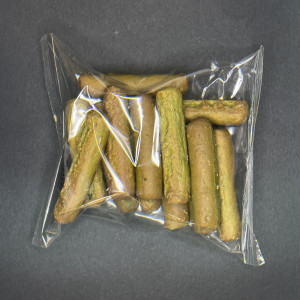
Packaging-Dependent Primary and Secondary Shelf-Life Prediction and Validation

Predict Shelf Life Before Testing

Shelf-life assessment is a standard practice in the food industry, primarily because food manufacturers are required to indicate the minimum durability date (MDD) on product labels, which applies to products stored in hermetically sealed packages...

Leggi tutto

DATHA - DAta Transformation and Homogenization plAtform

Cloud Edge platform for data preparation and the interchange of data and models

DATHA is a software platform that provides innovative tools for data preparation and interchange, enabling business professionals without data science expertise to explore, combine, and transform raw data from production lines into “refined data” in...

Leggi tutto

GCLP (Good Clinical Laboratory Practice) certification for clinical studies and trials.

GCLP certification in support of clinical trials.

GCLP certification is required by the AIFA regulations (AIFA Determination No. 809/2015) to ensure that clinical chemistry activities carried out in clinical trials (from Phase I to Phase III) are performed in accordance with the standards required...

Leggi tutto

GLUTENSENS

FoodTech solution to improve food safety in professional kitchens

Glutensens is a device designed to rapidly detect the presence of gluten traces in food, supporting restaurants, canteens, and catering services in managing gluten contamination.

The system enables the identification of very small amounts of gluten...

Leggi tutto

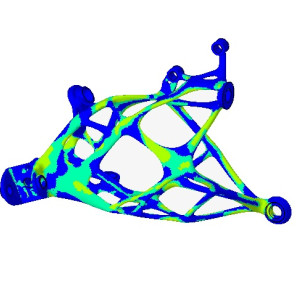
Redesign of structural metallic parts for additive manufacturing

Mechanical components: from traditional processes to additive manufacturing.

Additive manufacturing technologies for metal materials offer numerous potential advantages, including: the ability to create complex shapes (impossbile to make by traditional processes); the integration of multiple functions into a single component...

Leggi tutto