A collection of case histories of successful collaborations between High Technology Network Laboratories and businesses. These are tangible and customisable examples of the application of new technologies, products, or services that show how industrial research can meet the needs of innovation.

Results: 36

Packaging-Dependent Primary and Secondary Shelf-Life Prediction and Validation

Predict Shelf Life Before Testing

Shelf-life assessment is a standard practice in the food industry, primarily because food manufacturers are required to indicate the minimum durability date (MDD) on product labels, which applies to products stored in hermetically sealed packages...

Leggi tutto

DATHA - DAta Transformation and Homogenization plAtform

Cloud Edge platform for data preparation and the interchange of data and models

DATHA is a software platform that provides innovative tools for data preparation and interchange, enabling business professionals without data science expertise to explore, combine, and transform raw data from production lines into “refined data” in...

Leggi tutto

GCLP (Good Clinical Laboratory Practice) certification for clinical studies and trials.

GCLP certification in support of clinical trials.

GCLP certification is required by the AIFA regulations (AIFA Determination No. 809/2015) to ensure that clinical chemistry activities carried out in clinical trials (from Phase I to Phase III) are performed in accordance with the standards required...

Leggi tutto

GLUTENSENS

FoodTech solution to improve food safety in professional kitchens

Glutensens is a device designed to rapidly detect the presence of gluten traces in food, supporting restaurants, canteens, and catering services in managing gluten contamination.

The system enables the identification of very small amounts of gluten...

Leggi tutto

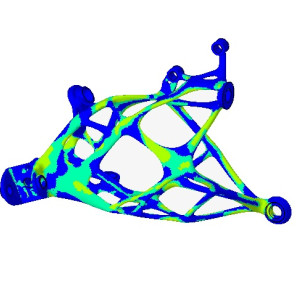
Redesign of structural metallic parts for additive manufacturing

Mechanical components: from traditional processes to additive manufacturing.

Additive manufacturing technologies for metal materials offer numerous potential advantages, including: the ability to create complex shapes (impossbile to make by traditional processes); the integration of multiple functions into a single component...

Leggi tutto

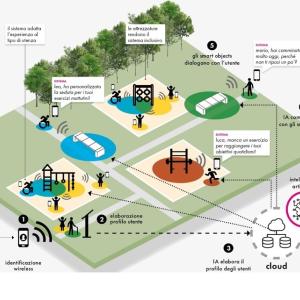
PLEINAIR Big Data platform for health and wellness for all age groups

Smart parks for health and social inclusion

The PLEINAIR Big Data Platform is designed to promote the adoption of active and healthy lifestyles for all age groups. In the PLEINAIR smart park, users can interact with Outdoor Smart Objects (OSOs): urban and recreational park furniture equipped...

Leggi tutto

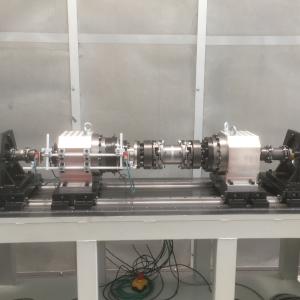
TEST RIG FOR THE CHARACTERIZATION OF SERVOMECHANISMS

Optimize motion accuracy and efficiency

Instrumented test rig for fine-tuning and optimization of servomechanisms and/or single functional components, in particular precision reducers, servomotors and compensation joints.

The servomechanisms can be validated on specific load laws with...

Leggi tutto

SINTERED ULTRA-HIGH TEMPERATURE CERAMIC MATRIX COMPOSITES

The most resistant materials in the world for space field

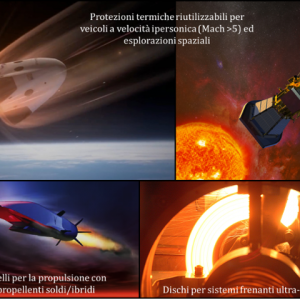
In the aerospace and fast transport sectors there is a growing demand for advanced structural materials capable of withstanding temperatures over 1500 °C in highly corrosive environments. Rocket nozzles and thermal protection systems for spacecraft...

Leggi tutto

DIGIMAN - Solutions for the digitalisation of companies in the manufacturing sector

Digitization to support businesses

The DIGIMAN project aims to develop tools to support the transformation of a generic industrial machinery into a Cyber-Physical System. This result will be possible thanks to the definition and implementation of a hardware-software platform, called...

Leggi tutto

Advanced ceramics by 3D extrusion based printing: from the development of ceramic raw materials to the creation of prototypes.

Low cost and sustainable 3D printing of advanced ceramics.

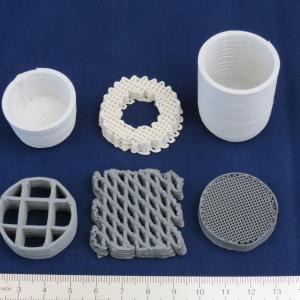
ENEA-TEMAF offers a complete service for the development of advanced ceramic components obtained by 3D printing with the technique based on paste extrusion. The printable ceramic pastes are water-based and characterized by a low organic content (<3%)...

Leggi tutto

Life Cycle Environmental impact assessment

Designing environmental sustainability: a viable option

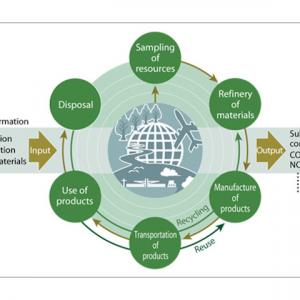
Life Cycle Assessment (LCA) is a methodology that assesses a set of interactions a product or service has with the environment, considering its entire life cycle including the stages of preproduction (therefore also materials extraction and...

Leggi tutto

Technological scouting on new materials

With us towards new materials

Service offered to enterprises with the aim of identifying new materials of interest for the company either available on the market or under development at research laboratories. Within the project, the interdepartmental CIPACK centre gathers...

Leggi tutto

PROTO-LAB - Laboratory for CAD/CAM Design Methodologies and new 3D design techniques

CAD/CAM technologies for SMEs

The Proto-Lab Laboratory performs innovation, research and technology transfer activities to support SMEs in various sectors on national interest in the CAD/CAM technology sphere, with a special focus on CAD 3D modelling, rapid prototyping and...

Leggi tutto

In vitro model to mimic a weaning baby's digestion to study protein and starch digestibility of baby foods

MORE DIGESTIBLE = MORE NUTRITIOUS

The ability to study protein and starch component digestibility is essential in nutritional assessment of baby food products. In this connection, it is necessary to have a digestive model that simulates the weaning baby's digestive steps in the most...

Leggi tutto

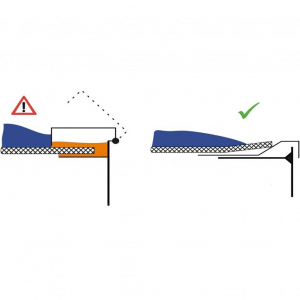
Hygienic design of food equipment

MORE HYGIENIC = SAFER MORE EFFICIENT MORE SUSTAINABLE

The hygienic design process takes into account the need to assure foodstuff's safety and suitability, starting from machinery design. This takes place by complying with a series of requirements, known as hygiene criteria in designing, as well as in...

Leggi tutto

Diagnostic imaging protocol applied to paintings

Science to analyse Works of Art

Scientific diagnostics is an important tool to improve the interpretation and knowledge of a work of art, allowing its evolution over time to be documented and monitored and any restoration work to be scheduled. It is obviously important in this...

Leggi tutto

Application of the RFID tag technology to manage naturalistic museum collections

Museal Human Centered RFID Technology and Design

TekneHub - Laboratory of the Ferrara Tecnopolo, in collaboration with the company Techsigno S.r.l., has tested and assessed the application of RFID (Radio Frequency Identification) technology to naturalistic collections. To date, the RFID technology...

Leggi tutto

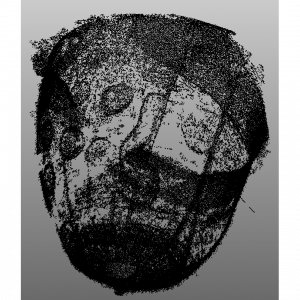
Virtual reconstruction of complex hollow shapes for optimised production of prosthetic limb sockets

From images to 3D model

The new method makes it possible to reconstruct hollow shapes, namely the inner surface of a prosthetic socket, starting from the images photographed from various viewpoints using a common camera. The software allows a three-dimensional model to be...

Leggi tutto

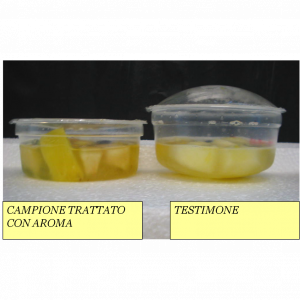
Use of natural antimicrobials for microbiological stabilisation of foodstuff

Essential oils lengthen life ... of food too!

Service implemented for companies that seek to pursue "natural" microbiological foodstuff stabilisation strategies. It provides a competitive market advantage since it addresses consumers' increasing demand for minimally treated products with no...

Leggi tutto

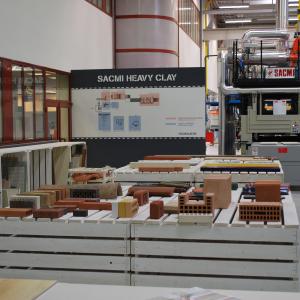
TECNOLATER - Flexible pilot laboratory for the development of new construction materials

Innovative clay product laboratory

The main objective of TECNOLATER was setting up a pilot laboratory at Sacmi's facilities, for the study and the development of flexible technologies to produce new construction materials. A research structure was set up to study innovative brick...

Leggi tutto